
Artificial intelligence companies
Strong AI: Also known as “artificial general intelligence” (AGI) or “general AI,” possess the ability to understand, learn and apply knowledge across a wide range of tasks at a level equal to or surpassing human intelligence https://www.tech-wonders.com/2024/12/how-ai-transforms-sales-efficiency-and-success.html. This level of AI is currently theoretical and no known AI systems approach this level of sophistication. Researchers argue that if AGI is even possible, it requires major increases in computing power. Despite recent advances in AI development, self-aware AI systems of science fiction remain firmly in that realm.
Deductive reasoning in logic is the process of proving a new statement (conclusion) from other statements that are given and assumed to be true (the premises). Proofs can be structured as proof trees, in which nodes are labelled by sentences, and children nodes are connected to parent nodes by inference rules.
AI-powered devices and services, such as virtual assistants and IoT products, continuously collect personal information, raising concerns about intrusive data gathering and unauthorized access by third parties. The loss of privacy is further exacerbated by AI’s ability to process and combine vast amounts of data, potentially leading to a surveillance society where individual activities are constantly monitored and analyzed without adequate safeguards or transparency.
At its 2022 Conference on Fairness, Accountability, and Transparency (ACM FAccT 2022), the Association for Computing Machinery, in Seoul, South Korea, presented and published findings that recommend that until AI and robotics systems are demonstrated to be free of bias mistakes, they are unsafe, and the use of self-learning neural networks trained on vast, unregulated sources of flawed internet data should be curtailed.
Various subfields of AI research are centered around particular goals and the use of particular tools. The traditional goals of AI research include reasoning, knowledge representation, planning, learning, natural language processing, perception, and support for robotics. General intelligence—the ability to complete any task performed by a human on an at least equal level—is among the field’s long-term goals. To reach these goals, AI researchers have adapted and integrated a wide range of techniques, including search and mathematical optimization, formal logic, artificial neural networks, and methods based on statistics, operations research, and economics. AI also draws upon psychology, linguistics, philosophy, neuroscience, and other fields.
Artificial intelligence technology
The term “artificial intelligence” was coined in 1956 by computer scientist John McCarthy for a workshop at Dartmouth. But he wasn’t the first to write about the concepts we now describe as AI. Alan Turing introduced the concept of the “imitation game” in a 1950 paper. That’s the test of a machine’s ability to exhibit intelligent behavior, now known as the “Turing test.” He believed researchers should focus on areas that don’t require too much sensing and action, things like games and language translation. Research communities dedicated to concepts like computer vision, natural language understanding, and neural networks are, in many cases, several decades old.
The term “artificial general intelligence” (AGI) was coined to describe AI systems that possess capabilities comparable to those of a human. In theory, AGI could someday replicate human-like cognitive abilities including reasoning, problem-solving, perception, learning, and language comprehension. But let’s not get ahead of ourselves: the key word here is “someday.” Most researchers and academics believe we are decades away from realizing AGI; some even predict we won’t see AGI this century, or ever. Rodney Brooks, an MIT roboticist and cofounder of iRobot, doesn’t believe AGI will arrive until the year 2300.
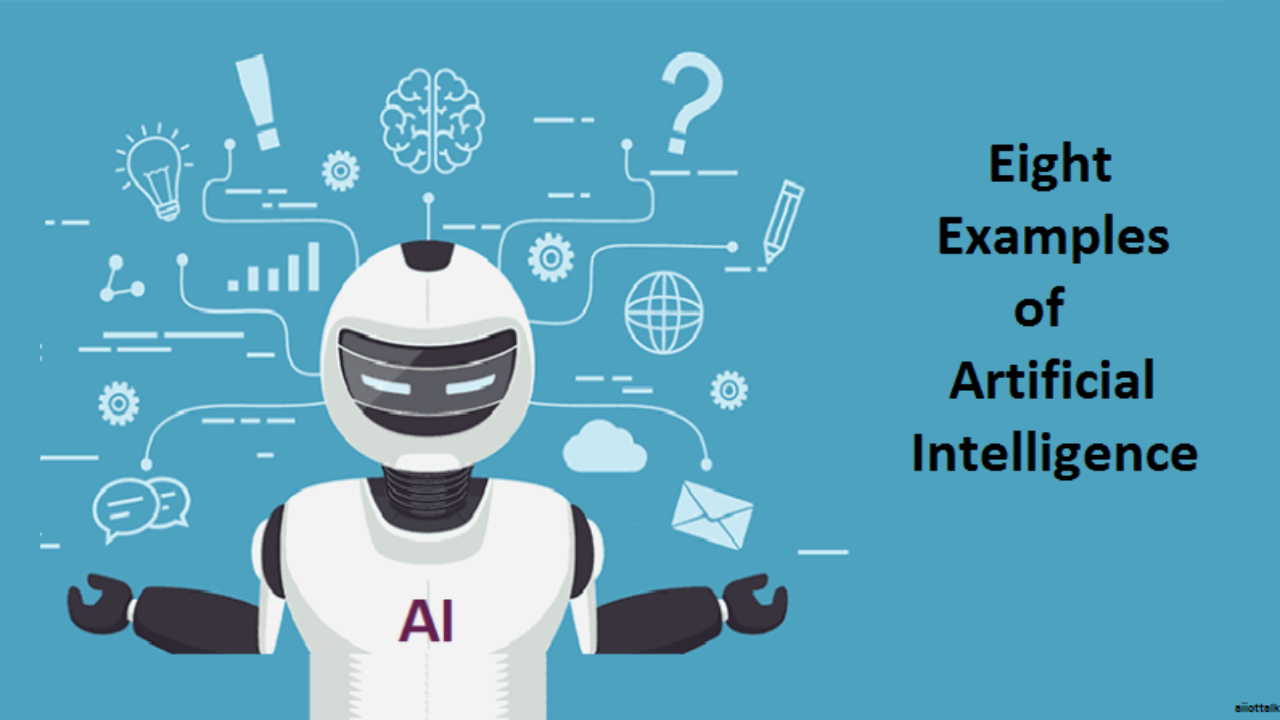
The term “artificial intelligence” was coined in 1956 by computer scientist John McCarthy for a workshop at Dartmouth. But he wasn’t the first to write about the concepts we now describe as AI. Alan Turing introduced the concept of the “imitation game” in a 1950 paper. That’s the test of a machine’s ability to exhibit intelligent behavior, now known as the “Turing test.” He believed researchers should focus on areas that don’t require too much sensing and action, things like games and language translation. Research communities dedicated to concepts like computer vision, natural language understanding, and neural networks are, in many cases, several decades old.
The term “artificial general intelligence” (AGI) was coined to describe AI systems that possess capabilities comparable to those of a human. In theory, AGI could someday replicate human-like cognitive abilities including reasoning, problem-solving, perception, learning, and language comprehension. But let’s not get ahead of ourselves: the key word here is “someday.” Most researchers and academics believe we are decades away from realizing AGI; some even predict we won’t see AGI this century, or ever. Rodney Brooks, an MIT roboticist and cofounder of iRobot, doesn’t believe AGI will arrive until the year 2300.
At the simplest level, machine learning uses algorithms trained on data sets to create machine learning models that allow computer systems to perform tasks like making song recommendations, identifying the fastest way to travel to a destination, or translating text from one language to another. Some of the most common examples of AI in use today include:
Researchers in the 1960s and the 1970s were convinced that their methods would eventually succeed in creating a machine with general intelligence and considered this the goal of their field. In 1965 Herbert Simon predicted, «machines will be capable, within twenty years, of doing any work a man can do». In 1967 Marvin Minsky agreed, writing that «within a generation … the problem of creating ‘artificial intelligence’ will substantially be solved». They had, however, underestimated the difficulty of the problem. In 1974, both the U.S. and British governments cut off exploratory research in response to the criticism of Sir James Lighthill and ongoing pressure from the U.S. Congress to fund more productive projects. Minsky’s and Papert’s book Perceptrons was understood as proving that artificial neural networks would never be useful for solving real-world tasks, thus discrediting the approach altogether. The «AI winter», a period when obtaining funding for AI projects was difficult, followed.
Artificial intelligence movie
Chappie doesn’t nail all of its proposed transhumanism sci-fi concepts but it creates a compelling case for being empathetic towards an artificial life. What better exercise in empathy is the experience of being a parent. If the core goal of this film was, “can we make you feel for something that isn’t human?” Chappie is a resounding success.
Henry convinces Monica to return David to his creators for destruction. En route, she instead spares David by abandoning him in the woods full of scrap metal and obsolete Mecha. Now accompanied solely by Teddy, David recalls The Adventures of Pinocchio and decides to find the Blue Fairy to become human, which he believes will regain Monica’s love.
In some films the setting can feel like just as much of a character as the actors on screen. A Star Wars fan can close their eyes and navigate the halls of the Millennium Falcon, which is why we get so excited to see it forty years later. The Matrix is a character. It is also an artificial intelligence. It houses the drama of artificial and human life and its intelligent design is filled with nooks and crannies for our heroes to explore. The world building of The Matrix franchise is not only its strongest element, it also makes it so unique in the history of cinema.
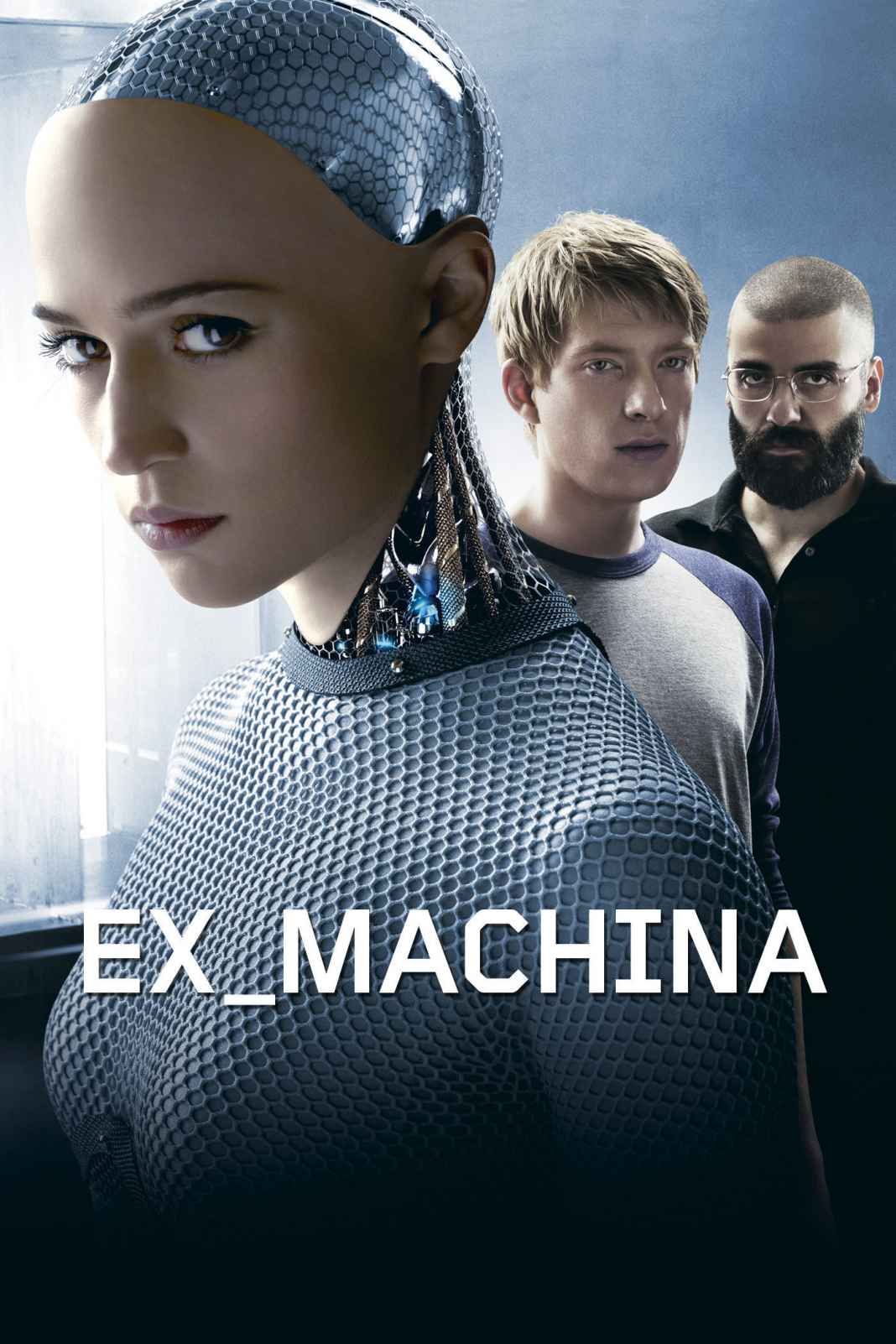
Chappie doesn’t nail all of its proposed transhumanism sci-fi concepts but it creates a compelling case for being empathetic towards an artificial life. What better exercise in empathy is the experience of being a parent. If the core goal of this film was, “can we make you feel for something that isn’t human?” Chappie is a resounding success.
Henry convinces Monica to return David to his creators for destruction. En route, she instead spares David by abandoning him in the woods full of scrap metal and obsolete Mecha. Now accompanied solely by Teddy, David recalls The Adventures of Pinocchio and decides to find the Blue Fairy to become human, which he believes will regain Monica’s love.
In some films the setting can feel like just as much of a character as the actors on screen. A Star Wars fan can close their eyes and navigate the halls of the Millennium Falcon, which is why we get so excited to see it forty years later. The Matrix is a character. It is also an artificial intelligence. It houses the drama of artificial and human life and its intelligent design is filled with nooks and crannies for our heroes to explore. The world building of The Matrix franchise is not only its strongest element, it also makes it so unique in the history of cinema.
